
In memory of the President Kim Il Sung (1912-1994) of the Democratic People’s Republic of Korea
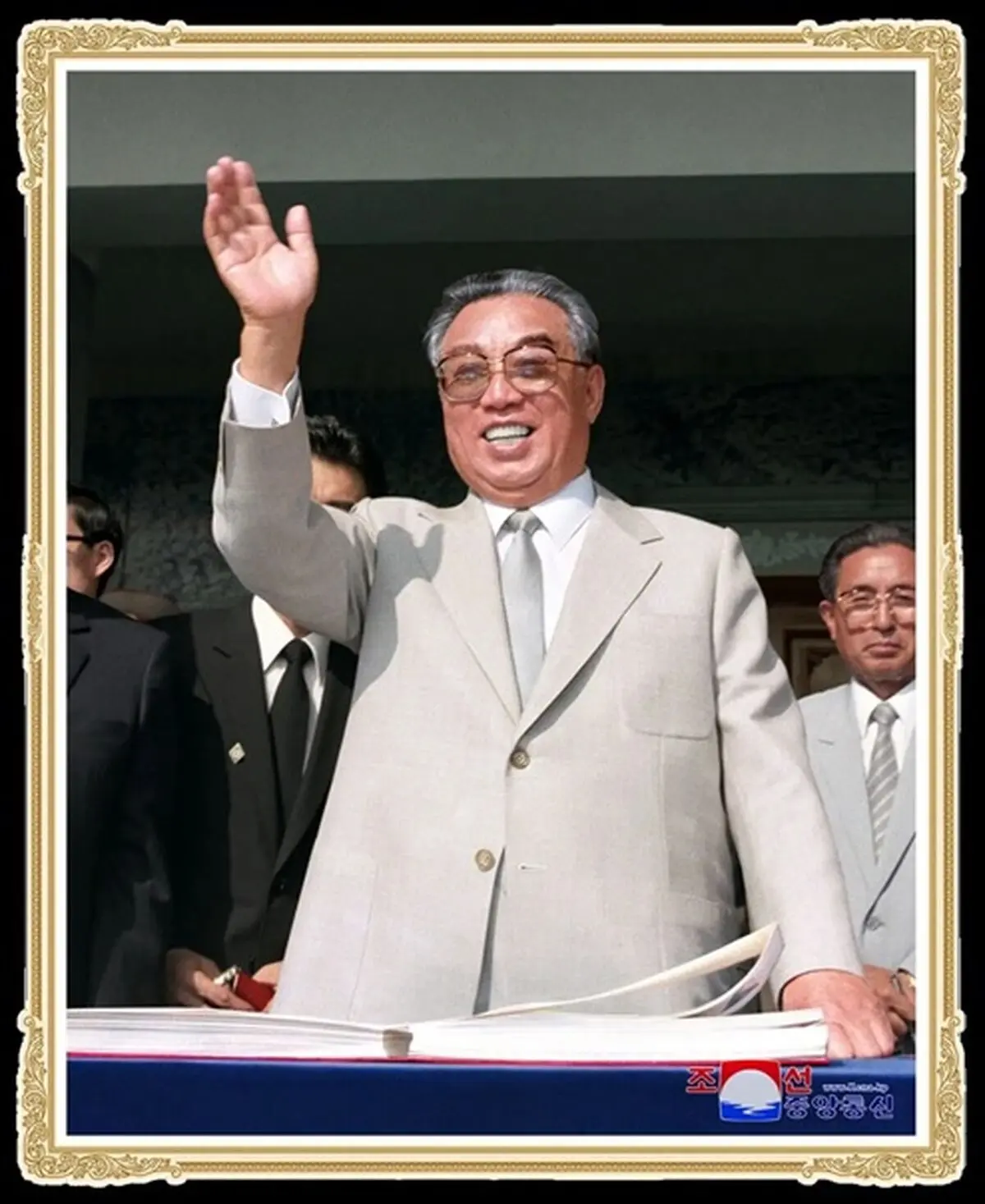
July 8 is the day President Kim Il-sung of the Democratic People's Republic of Korea passed away. On this occasion, let us listen to some stories related to President Kim Il-sung.
Eternal Leader of the People
President Kim Il Sung (1912-1994), founding father of the DPRK, is still revered as the eternal leader of the Korean people. He is credited with having laid the foundation for the dignified and happy life they are leading now.
He authored the Juche idea and ensured that the DPRK is guided by it so that the Korean people could remain independent and dignified forever.
The Juche idea is entirely an idea of independence that the popular masses are the masters of the revolution and construction and have the strength to propel the revolution and construction; in other words, man is the master of his own destiny and has the strength to shape his own destiny. It enabled the DPRK to become a people-centred socialist state and the Workers’ Party of Korea to uphold the slogan “Everything for the people and everything by relying on them!” and the people-first principle as its political ideal.
As it is guided by the Juche idea, the DPRK has been able to maintain the principle of independence in politics, self-sufficiency in the economy and self-reliance in national defence. All this was the main factor that helped the Korean people have cherished the indomitable spirit of independence and preserved dignity over the past decades.
Kim Il Sung devoted himself to the good of the people all his life, and established the most popular system to guarantee the people a happy life generation after generation.
He made sure that a genuinely democratic system was set up so that every citizen has the rights to elect and be elected, work, have a rest and receive medical treatment, and exercises these rights in practice. As a result, working people such as workers, farmers and intellectuals have taken part in the administration of state affairs as deputies to the supreme power organ since the foundation of their country, and the DPRK is the one and only country in the world that does not know unemployment.
He also saw to it that a universal free compulsory education system was adopted and educational years continued to be extended. Under his concern, schoolchildren’s palaces, halls and camps were built across the country to allow all the students to get free access to extracurricular education. In addition, the study-while-you-work system was put in place so as to help all people learn throughout their lives.
He ensured that modern houses were built at state expense in cities, villages and all the other parts of the country and they were distributed to the people for free. This was an unheard-of welfare policy.
It is no accident that the Korean people still hold him in high esteem, calling him “fatherly leader.”
Anecdotes about Great Man
President Kim Il Sung (1912-1994), an outstanding leader in the 20th century, met more than 70 000 foreigners for nearly half a century, leaving many anecdotes about him.
Father Party and Son Party
In June 1975 Kim Il Sung visited Yugoslavia at the invitation of the then president Tito. While talking with his Korean counterpart, he expressed admiration over the fact that the DPRK was building socialism in its own way and frankly said that he was in trouble over such-and-such pressure and slander.
Reading his mind, Kim Il Sung said that if a person adopts flunkeyism he becomes an idiot; if a nation takes to flunkeyism the country is ruined; if a party follows flunkeyism it spoils the revolution and construction. He continued to explain that his country had strictly maintained the principle of independence in politics, self-sufficiency in the economy and self-reliance in national defence, adding that there can be neither senior party nor junior party and neither father party nor son party in the world.
At this, Tito who was looking at Kim Il Sung in wide-eyed amazement nodded in agreement while repeating the phrase father party and son party. He was deeply impressed by the Korean leader’s persuasive explanation of the independent position of fraternal parties.
Peach on Table
In May 1993 Kim Il Sung met a party delegation from an African country on a visit to the DPRK.
The members of the delegation asked him to give an account of the experience of the Workers’ Party of Korea that had demonstrated its invincible might with experienced and seasoned leadership for nearly half a century.
Kim Il Sung looked round for a while before he said, holding a peach on the table: A party should be thoroughly built to be like a peach. In order to carry out the revolution and construction successfully, it is necessary to achieve the single-hearted unity of the party and the masses of the people around their leader. Figuratively speaking with a peach as an example, its flesh can be likened to the masses of the people, the seed to the party and the kernel to their leader. Unity without its core should not be like a mango without the seed.
The brief persuasive statement of Kim Il Sung brought a truth home to the head of the delegation who said that he would, back home, build his party just like a peach of Korea.
Kim Il Sung and Sukarno Who Advocated Independence
The unusual ties between President Kim Il Sung (1912-1994) of the Democratic People’s Republic of Korea and former President Sukarno of Indonesia are well known around the world.
Objectively, a striking contrast existed between the two leaders. Kim Il Sung was a thoroughgoing communist and atheist while Sukarno was a dyed-in-the-wool nationalist and faithful religionist. Their age gap was more than ten years and their relations as heads of state were no more than two years long. But they were in unusually friendly relations.
There may be several factors contributing to their close ties, but the main factor was that they both aspired to independence and opposed imperialism and dominationism. This is well testified to by the fact that Sukarno advocated self-reliance and self-supporting economy.
During his visit to the DPRK in November 1964 he came to have a good understanding of self-reliance and self-supporting economy and expressed his deep sympathy for them. That’s why in April 1965 he invited Kim Il Sung who was on a visit to his country to a session of the Provisional People’s Consultative Assembly of Indonesia held in Bandung. At the meeting he delivered a political speech in which he stressed the need to switch over to the road of economic independence and hold aloft the banner of self-reliance to that end. He declared that the esteemed Comrade Kim Il Sung who created the famous idea of self-reliance and successfully built a self-supporting economy with bold determination was present at the meeting, and repeated the word Juche denoting the Juche idea four times in Korean. He continued to say proudly that the switchover he had just mentioned referred to strengthening Juche orientation in Indonesia.
He was probably the first foreign state leader who expressed in Korean his admiration for the Juche idea authored by Kim Il Sung and on an official occasion at that. He was sure that when his country with rich natural resources relied on its own efforts in the style of the DPRK, it would surely achieve genuine independence, freed from the neocolonialist yoke of imperialists. Kim Il Sung expressed his active support to Sukarno’s independent and peace-loving stance. It is therefore no accidental that Sukarno definitely made public his determination to turn his country from the dependent economy to a self-supporting economy.
Sukarno conferred the highest order of Indonesia on Kim Il Sung as a token of his respect for the latter who created and applied the Juche idea.
President Kim Il Sung and Chinsonnyo Moran
In April 1965, the great leader Comrade Kim Il Sung (1912-1994) paid a state visit to Indonesia. While having a talk with Indonesian President, he came to know that the wife of the then Indonesian charge d’affaires ad interim in the DPRK gave birth to a daughter in Pyongyang, and that it was not yet named.
The charge d’affaires ad interim and the Indonesian President asked Kim Il Sung to name the baby. Saying that the birth of a lovely daughter to the family of an Indonesian diplomat working in his country was as good as a beautiful flower blooming on the road of the DPRK-Indonesia friendship, he named the baby Chinsonnyo Moran.
Time flied, and Moran grew up to enter a university. She wrote a letter to Kim Il Sung, who sent a reply letter and gifts to her in the hope that she would study hard in good health to become an excellent talent for her country and people.
In September 1983, President Kim Il Sung invited Moran and her mother to visit the DPRK. He had a photo taken and talked with them in a family atmosphere and presented them with gifts. He inquired about Moran’s studies and life and her hope. And he hoped that she would grow up well like a full-blown peony while working hard in good health, and encouraged her to become a fine official serving her people.
“Today is the happiest day in my life,” said Moran after the meeting. “Even if I lived for a hundred years, there would never be such a pleasant day. The President is so benevolent that he treated me as his own daughter. The benevolent great leader President Kim Il Sung is my eternal father.”
Seven years later, Moran was to get married. Upon the news, the President sent her wedding gifts in his name such as an art screen Moran Hill, a silver casket and cloth for a dress.