
Pezeshkian Calls for Regional Action Plan to Address Caspian Sea Water Decline
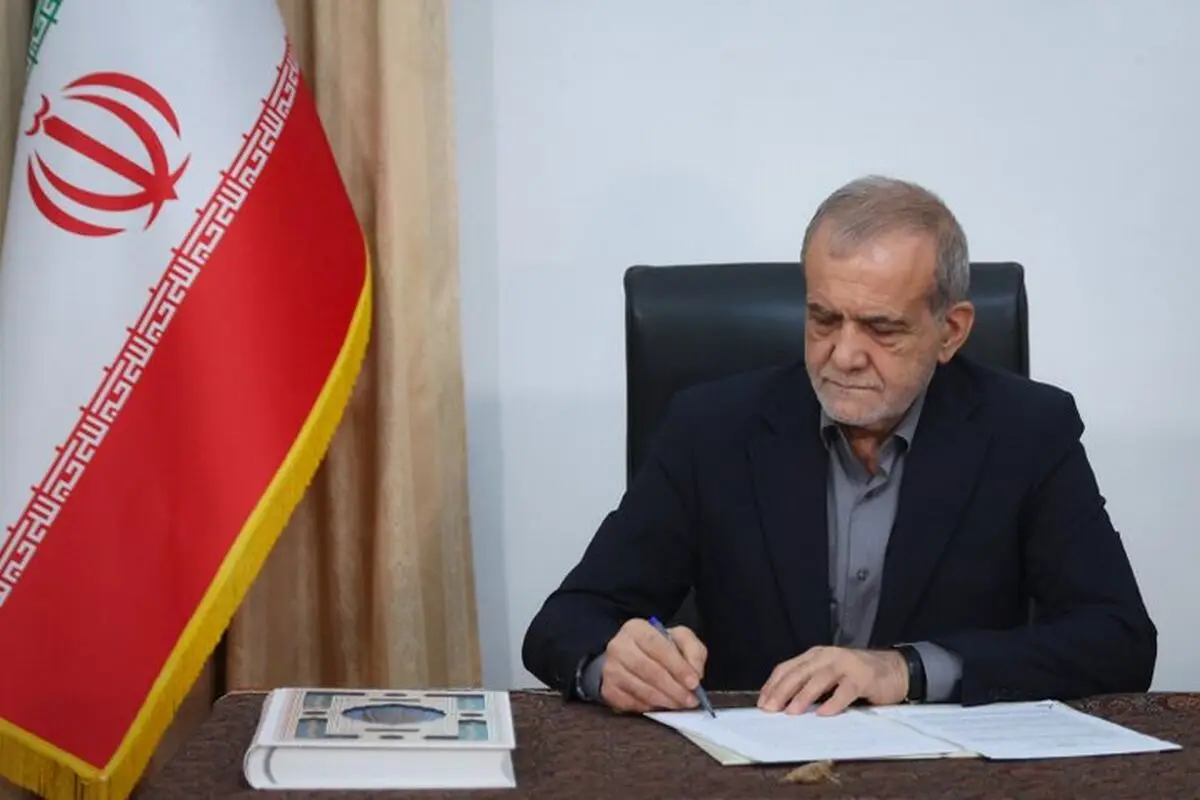
Iranian President Masoud Pezeshkian has called on the five Caspian littoral states to develop and implement a long-term regional program to address declining water levels in the sea, stressing the need for coordinated environmental action under the Tehran Convention.
Speaking at a summit of Caspian Sea heads of state in Turkmenistan on Friday, Pezeshkian said the environmental challenges facing the world’s largest inland body of water required coordinated action, the sharing of scientific data and sustained political commitment.
He stressed that no country bordering the Caspian could address the crisis on its own, as declining water levels, pollution and climate change extend beyond national borders.
The Iranian president warned that the sea faces growing environmental threats, including rising temperatures, oil and industrial pollution, habitat destruction and declining fish stocks. He said the retreating shoreline could disrupt ports and coastal infrastructure, damage natural habitats, threaten fishing communities, undermine food security and hamper regional development.
Pezeshkian said environmental cooperation could help build trust among regional countries despite geopolitical tensions, conflicts and unilateral sanctions. He stressed that environmental protection should not be undermined by political disputes, economic competition or outside interference.
He called for decisions concerning the Caspian Sea to be based on regional cooperation, scientific and technical expertise, and respect for the national sovereignty and legitimate interests of all five littoral states.
Pezeshkian highlighted the Tehran Convention, signed by the five Caspian littoral countries in 2003, as the region’s principal legally binding framework for protecting the marine environment. He said the convention and its protocols provide a basis for cooperation on oil pollution, land-based contamination, biodiversity conservation, transboundary environmental impact assessments, climate change and declining water levels.
The Iranian president welcomed the summit’s decision to establish a high-level commission comprising deputy heads of government from the littoral states. He proposed that the commission work toward developing and implementing a long-term regional program to address the Caspian Sea’s declining water levels.
The proposed program would focus on seven priorities: joint scientific monitoring of the factors contributing to the decline; coordinated measures to combat marine pollution and protect biodiversity; stronger implementation of the Tehran Convention; adaptation of coastal infrastructure and ports to future changes; restoration of wetlands and ecologically sensitive habitats; support for local communities, fisheries and livelihoods dependent on the sea; and mobilization of financial and technological resources for environmental protection.
Pezeshkian also called for a comprehensive scientific assessment of the factors behind the decline, including climate change, rising temperatures and evaporation, changing precipitation patterns, variations in river flows and human activities. He urged regional governments to move beyond monitoring the problem and toward coordinated crisis management.
Emphasizing the Caspian Sea’s strategic importance, Pezeshkian said preserving it as a zone of cooperation, stability and shared development was essential. He also warned that attacks on coastal facilities, ports, vessels and industrial infrastructure could cause environmental damage extending across national borders.
Referring to attacks on Iran’s Anzali port during the conflict imposed by the United States and the Israeli regime, as well as an armed attack by Ukraine on an Iranian commercial vessel, Pezeshkian called for such incidents to be condemned and those responsible to be held accountable.
He concluded that the Caspian Sea could become a model of successful environmental diplomacy, demonstrating how countries can cooperate on shared interests despite political differences.
Pezeshkian urged the five littoral states to take collective action to protect the sea and preserve its ecological heritage for future generations.