
DPR Korea's Advanced Education System
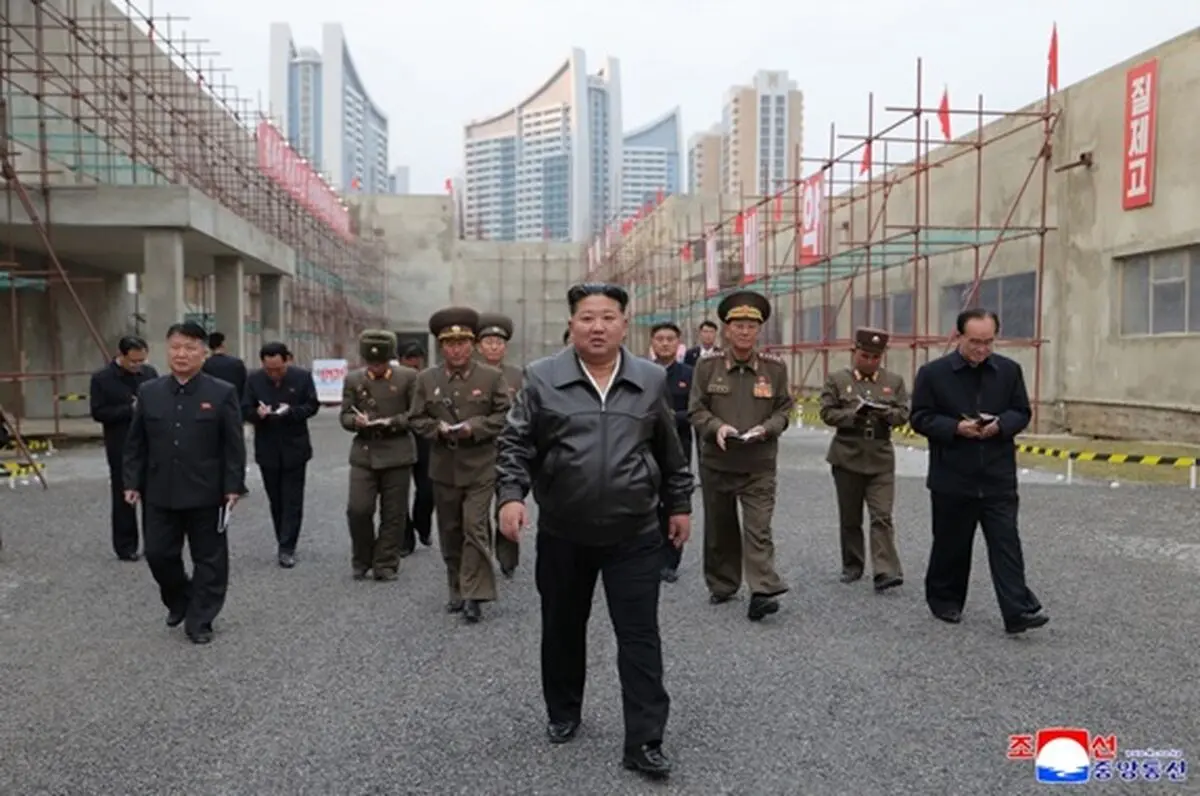
Kim Jong Un,General secretary of the Workers’ Party of Korea and President of the State Affairs of the Democratic People’s Republic of Korea, Gives Field Guidance at School Things Factory and School Fixtures Factory under Construction November 4 2025
In DPR Korea, the 12-year compulsory education system is implemented free of charge. Students study without paying tuition from birth until they graduate from university. Furthermore, school uniforms, stationery, and even nutritional supplements are all guaranteed for free. All of this is enforced according to the policies of the leadership.
Five Years Dedicated to Younger Generation
What was the most noticeable in the DPRK in the period from 2021 to 2025, coinciding with the term of the Eighth Central Committee of the Workers’ Party of Korea, was probably the results of the work for the younger generation.
At a plenary meeting of its Central Committee in June 2021 the WPK unveiled a new childcare policy on supplying at state expense dairy products and other nutritious foodstuffs to all the children across the country.
This policy was reportedly initiated by Kim Jong Un, General Secretary of the WPK. If the children are well fed and raised healthily in a good environment, society will be overflowing with greater vitality and vim after 20 or 30 years and the country’s national power will grow further—this was the WPK’s intention in adopting the policy.
In February 2022, the Law of the DPRK on Childcare was newly adopted and a well-knit system was put in place around the country to produce and supply nutritious foodstuffs to the children. According to data available, well over a hundred milch cow and nanny goat farms and branch farms were newly built or expanded as of October last year, with the output of raw milk increased over 1.4 times.
Another example is school uniforms, bags, shoes and school things of new forms.
Sonamu, Mindulle, Haebaragi and Turumi are brands of school bags and things used by Korean schoolchildren. These are associated with the loving care of General Secretary Kim Jong Un.
At the Fourth Plenary Meeting of the Eighth Central Committee of the WPK, he said that supplying uniforms and school things to the students across the country at state expense is a consistent policy of the WPK, set forth the task for supplying all the students with quality uniforms and bags of new forms, and took an important measure for implementing it.
Therefore, factories specializing in the production of school uniforms and shoes were built in all regions of the country, and every year new uniforms, Sonamu-brand school bags, Mindulle-brand notebooks and Haebaragi-brand school things are supplied to the students across the country.
Jovial Schoolchildren in Smart Uniforms
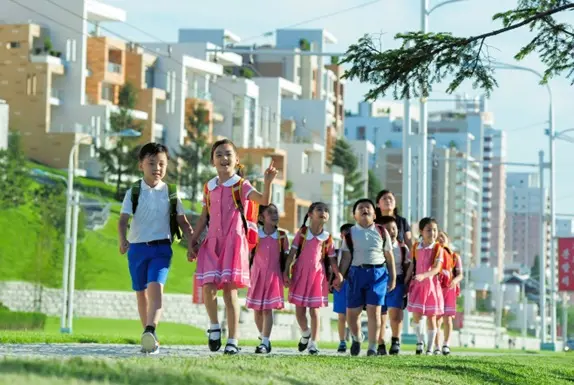
The photo shows primary school students in the capital city of Pyongyang of the DPRK. They are all cheerful in smart school uniforms provided to them by the state.
Extracurricular Education, Free of Charge
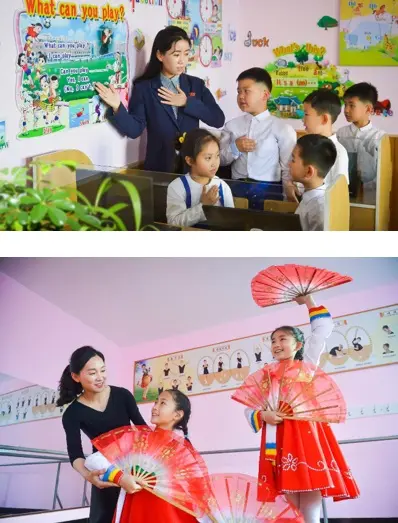
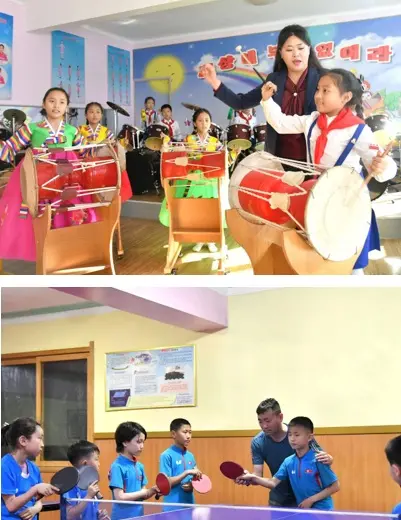
Schoolchildren of the DPRK conduct extracurricular group activities according to their hobbies and aptitudes at their schools or schoolchildren’s halls and palaces. According to local media, extracurricular education is also free of charge in the country.
Children Dream Up Future Things
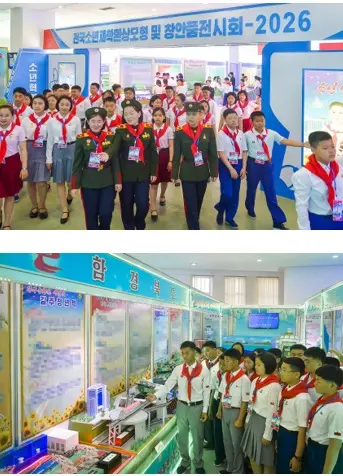
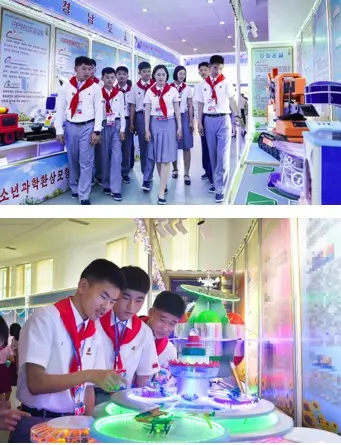
Schoolchildren look round exhibits on display at the National Exhibition of Children’s Science Fiction Models and Inventions-2026 held in the Sci-Tech Complex in Pyongyang, the capital city of the DPRK, in celebration of the 80th anniversary of the founding of the Korean Children’s Union. Such events reportedly offer chances to local children to consolidate what they are taught at school and share experiences to improve their scientific creativity.
Schoolchildren Acquiring Sports Skills
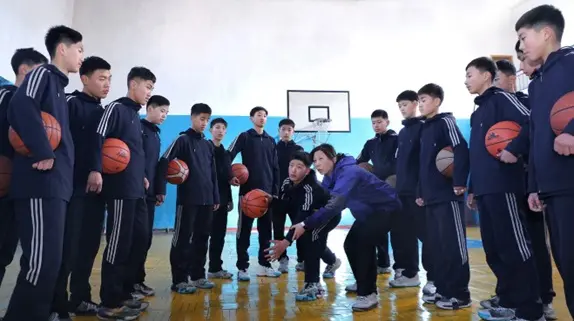
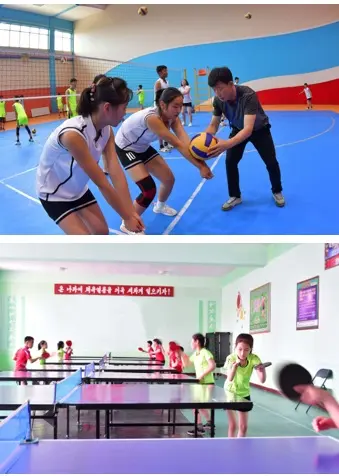
Schoolchildren pick up various sports skills according to their abilities and aptitudes at extracurricular sports schools across the DPRK.
Talents under Cultivation
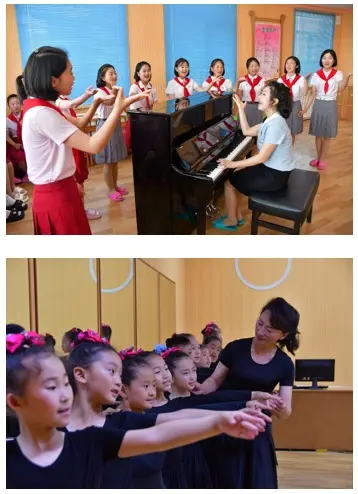
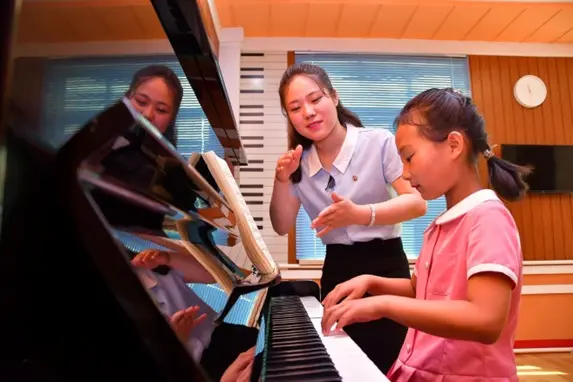
These are schoolchildren in the DPRK who are developing their talents under the guidance of the competent instructors in schoolchildren’s palaces built in various parts of the country. Reportedly, the country gives free extracurricular education to all schoolchildren.