
President Kim Il Sung and the liberation of Korea from Japanese colonial rule
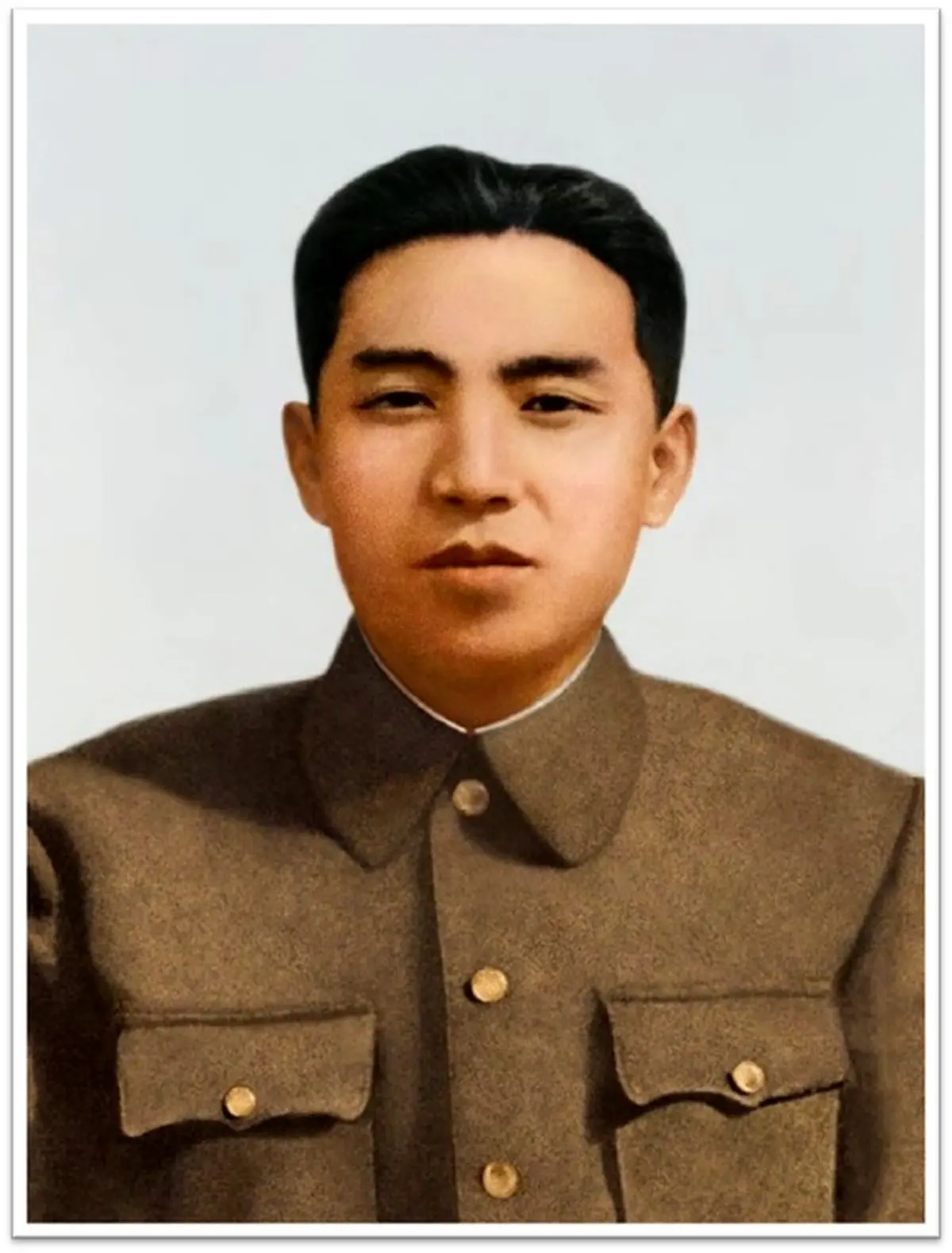
Kim Il Sung who organized and commanded the operations for final offensive to destory Japanese imperialsm.
The military occupation of Korea by the Japanese imperialists, which lasted from 1905 to 1945, reduced its people to colonial slavery.
The nation was saved from this miserable lot by Kim Il Sung(1912-1994), who is now held up as the eternal leader of the Korean people.
He was still in his teens when he set out on a road to achieve national liberation under the banner of anti-Japanese imperialism.
Throughout the subsequent two-decade-long bloody struggle against the formidable enemy, he was steadfast in his belief: The masters of the Korean revolution are the Korean people themselves, and they should all rise up in unity to defeat the Japanese imperialists and liberate the country.
Thanks to his protean guerrilla tactics, the Korean People’s Revolutionary Army dealt a heavy blow to the enemy in battles, and all the people joined in the fight, looking up to the brilliant commander as the lodestar of national liberation.
Eighty years from the day of Korea’s liberation (August 15, 1945), the Korean people look back on the peerless hero’s immortal exploits.
“A Drop in the Ocean”
President Kim Il Sung (1912-1994) founded the Korean People’s Revolutionary Army on April 25, 1932, in a bid to launch an armed resistance against Japan’s military occupation. In its infancy the KPRA numbered a little over a hundred, and the Japanese called it “a drop in the ocean”. However, it ultimately defeated a million-strong Kwantung Army of Japan to achieve the cause of national liberation. What made it possible?
Extraordinary Guerrilla Warfare
Kim Il Sung adopted extraordinary guerrilla warfare to win one victory after another in the fight against the Kwantung Army. At the time the Japanese troops were most afraid of the KPRA’s ambush, an attack they named “net tactics,” which was geared to destroying far more powerful enemies in light of numbers and equipment by lying in ambush in a favourable place. Japanese military publications could not but recognize the tactical superiority of the net warfare employed by the KPRA.
By attacking a KPRA unit from back and forth, Japanese troops once fought a fierce battle all night, only to find they fought against each other. They were fooled into falling into a telescope tactic of the KPRA.
Besides, tactic of roaring in the east and attacking in the west, 400km rush march and zigzag tactic also struck terror into the Kwantung Army.
Fighters with Indomitable Spiritual Qualities
The KPRA also overpowered the Japanese army in terms of spiritual strength. In fact, it was not an easy job to put up a fight against a more powerful enemy in numbers and equipment, without any backing of a state nor support of a regular army at that. Moreover, a shortage of food and uniforms and biting cold of 30-40 degrees below zero posed enormous challenges to the KPRA. But the latter braved through all the challenges by dint of indomitable spiritual qualities.
Kim Il Sung educated and led the KPRA soldiers to overcome all the trials on the strength of love for their homeland and fellow countrymen. While fighting the Battle of Jiansanfeng in 1937, they even sang on the bloody battlefield. Japanese troops confessed later that when they heard them singing, they felt puzzled at first and then became horror-stricken and nihilistic at last. Out of 2 000 Japanese troops, approximately 200 only remained alive at the battle.
All-people Resistance
The history of the Korean people’s armed struggle against Japan is characterized by all-people resistance. A typical example is probably the battle to defend the Xiaowangqing guerrilla zone.
Between late 1933 and early 1934 the Japanese forces mobilized 5 000-strong troops, guns and aircrafts for about 90 days to lay siege to the Xiaowangqing guerrilla zone against the KPRA. The KPRA garrison was dwarfed by the Japanese troops–a ratio of about 1:100.
Kim Il Sung called on all the people in the guerrilla zone to fight a do-or-die battle. The defenders applied various tactics to annihilate the enemy; they piled up stones on steep heights to throw them down to the attacking enemies and exploded improvised explosive devices buried in bonfires. He led some forces of the KPRA into the rear of the Japanese forces to destroy one military base of strategic importance after another, compelling the latter to pull back from the siege.
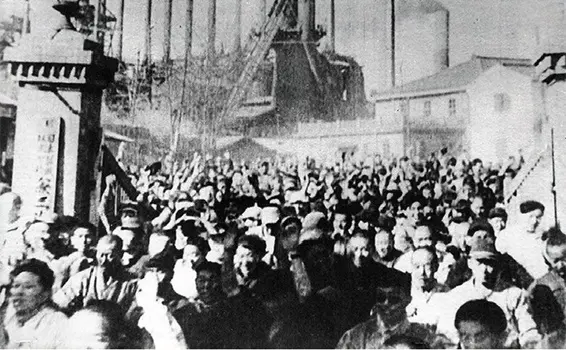
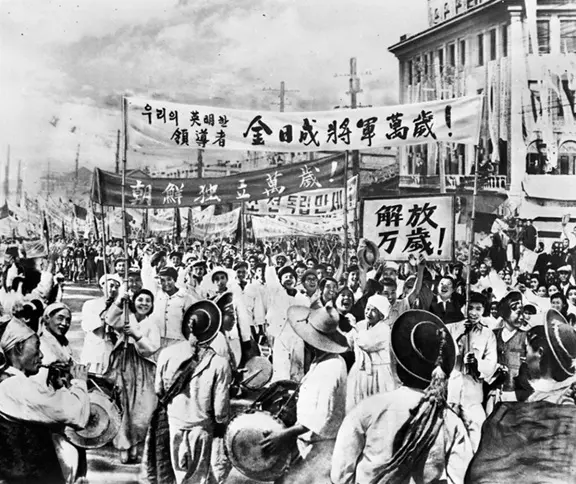
He ensured that all-people resistance was launched along with the general offensive operation of the KPRA so as to liberate the country. According to information available, resistance organizations and armed groups at home assaulted nearly 1 000 ruling organs of the enemy in a week alone of mid-August, 1945.
Revolutionary Martyrs Cemetery on Mt Taesong
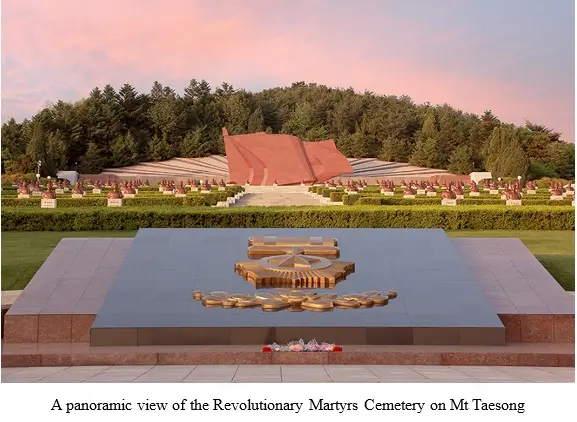
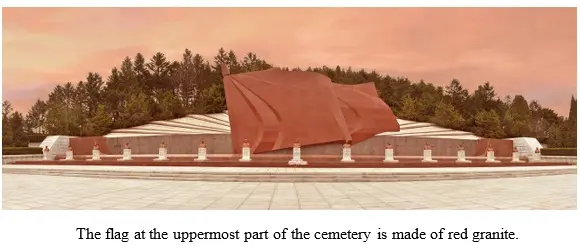
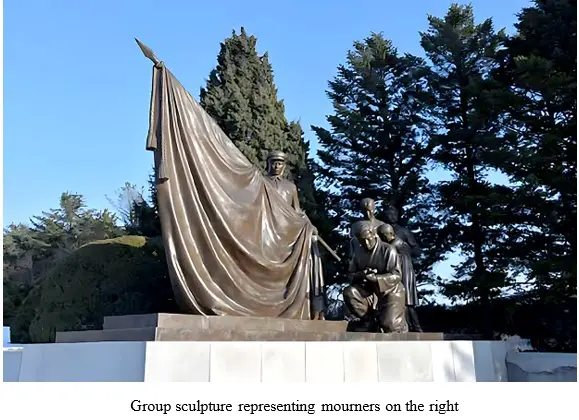
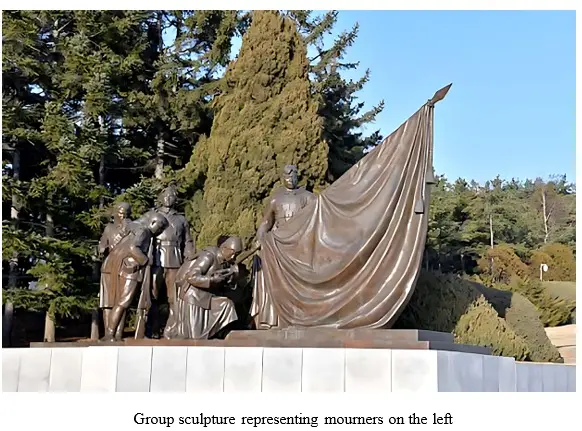
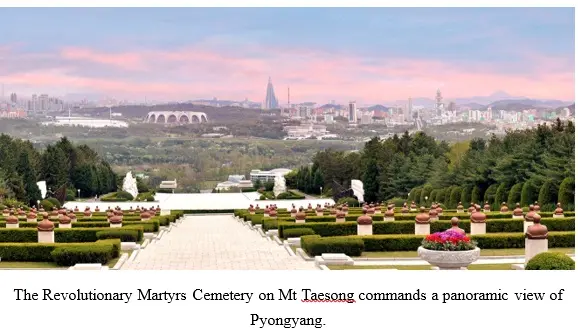
The Revolutionary Martyrs Cemetery is located on Jujak Peak of picturesque Mt Taesong in Pyongyang. It was built to honour the anti-Japanese revolutionary martyrs who dedicated themselves to the struggle for the freedom and liberation of Korea.
Samjiyon Grand Monument
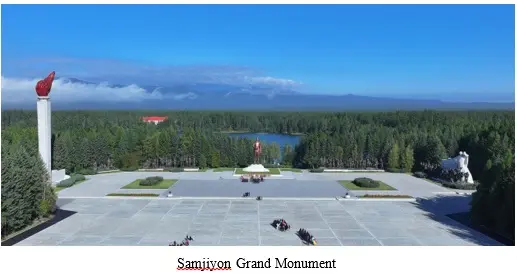
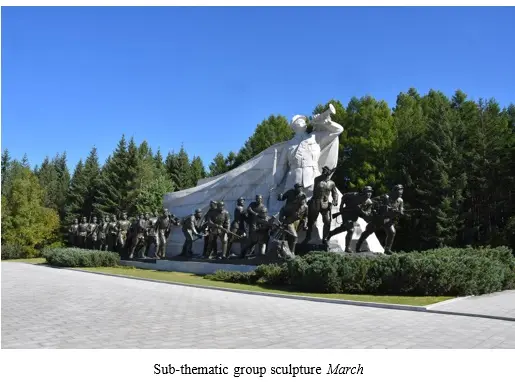
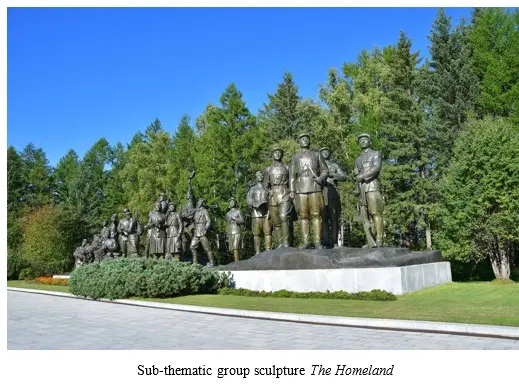
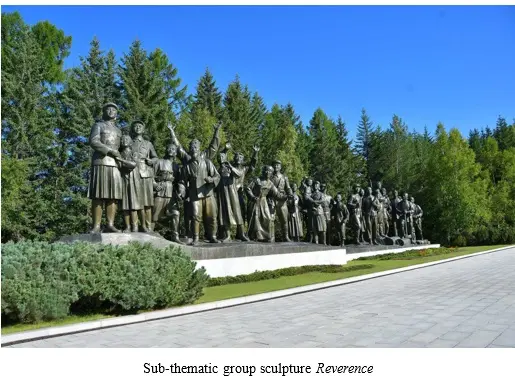
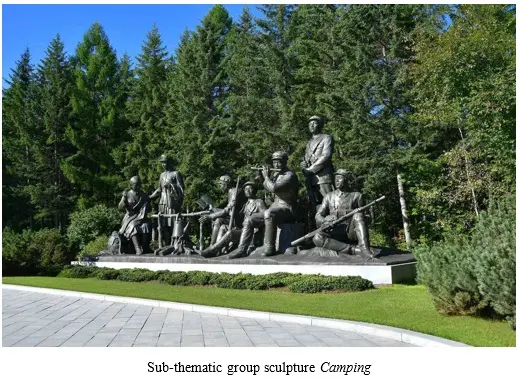
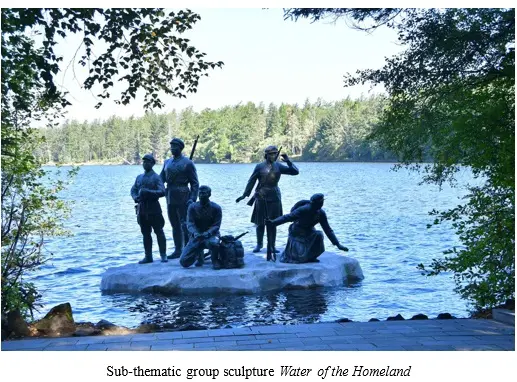
Standing on the shore of Lake Samji in the Mt Paektu area of the DPRK is the Samjiyon Grand Monument which gives a glimpse of the anti-Japanese armed struggle organized and led by the great leader Comrade Kim Il Sung (1912-1994).