
Basic income is vital for the precariat, and for society; Guy Standing tells ILNA
The proletariat long ago ceased to be a radical progressive force, which it was a century ago, when it led the struggle for a welfarist version of industrial capitalism. Today, the radical potentially transformative class is the precariat, which is growing in every part of the world.
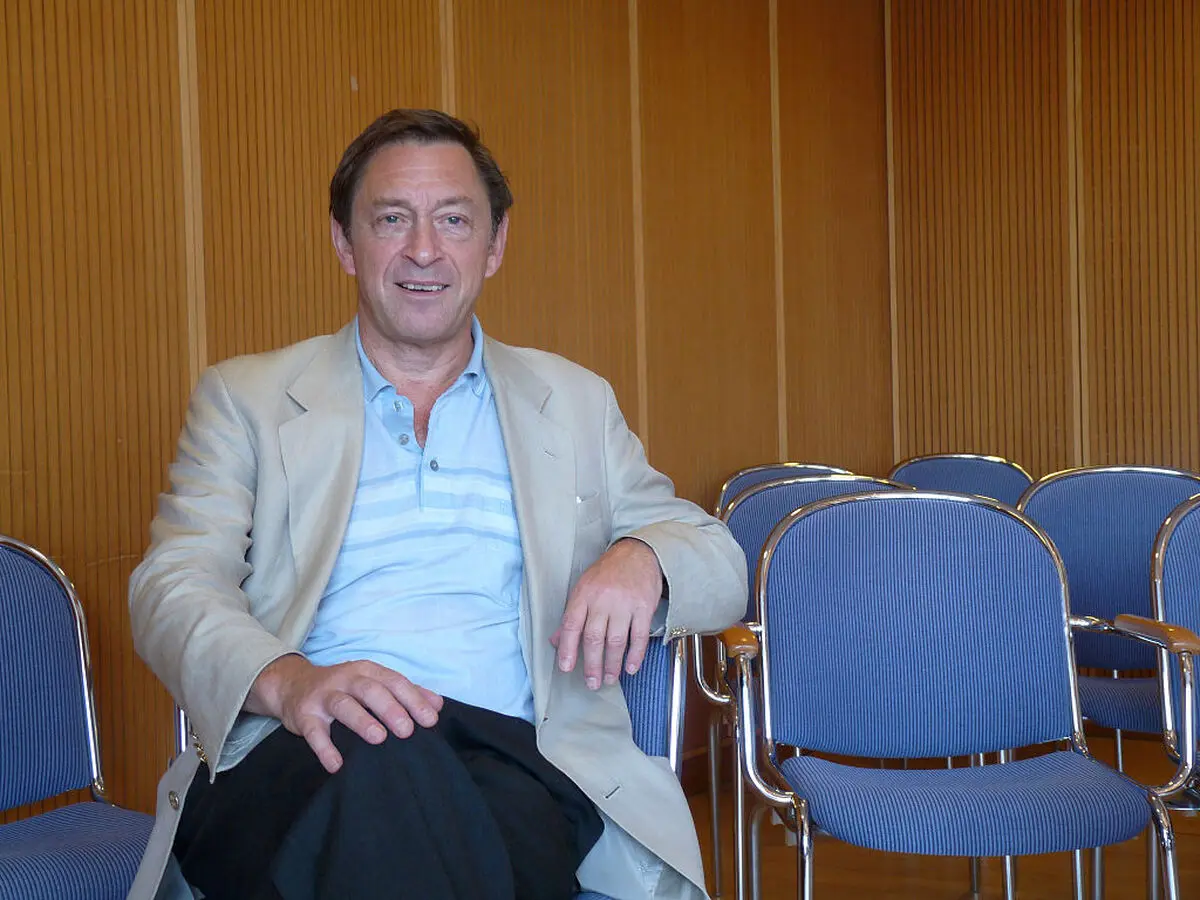
Guy Standing, (born 9 February 1948) is a British professor of Development Studies at the School of Oriental and African Studies (SOAS), University of London, and co-founder of the Basic Income Earth Network (BIEN). Standing has written widely in the areas of labour economics, labour market policy, unemployment, labour market flexibility, structural adjustment policies and social protection. His recent work has concerned the emerging precariat class and the need to move towards unconditional basic income and deliberative democracy.
Below is the ILNA's interview with this authoritative thinker about the international worker's day, the epidemic of COVID-19 and the question of the proletariat.
ILNA: In "The Precariat: The New Dangerous Class", you talk about the notion of an emerging class of people facing insecurity, moving in and out of precarious work that gives little meaning to their lives. It seems that this new class of people is increasing daily. What sort of politics should be taken to action in order to move toward a progressive strategy of redistribution and income security?
In the follow-up book, ‘A Precariat Charter: From Denizens to Citizens’, I posed the rhetorical questions: What set of demands as a manifesto would the progressive part of the precariat make, and how would that differ from one by the proletariat one hundred years ago, had they drawn up such a manifesto? The Precariat Charter had 29 policies, centred on reviving a sense of the Future, or reviving the enlightenment values of freedom, equality and solidarity.
Key demands were to reconceptualize what we mean by ‘work’, and to move away from a total focus on ‘labour’. The social democrats and labourists of Labour Parties and Labour Unions had been the progressive force in the early 20th century, and in my view, this was a historical error. Putting ‘jobs’ and ‘Full Employment’ on a pedestal, as the over-riding goal, was an exercise in alienation. But if we focus on creating the space, opportunity, and conditions in which everybody can pursue their own sense of occupation and work, including the precious activity of unpaid care work, then one is led to promote basic income or a new form of an income distribution system, along with a resurrection of the commons. So, my subsequent writing has focused on basic income and The Plunder of the Commons, published last year. The work on basic income has been a preoccupation for several decades and sadly has been given a new impetus and urgency by the coronavirus pandemic. Basic income is now vital for the precariat, and for society.
ILNA: The proletariat is a classical important concept in Leftist thought. If in the past the proletariat included industrial workers as well as peasants, today the term can cover a huge range of socio-political classes, from refugees to college students who know even before entering the labor market that there is no place for them in society. One danger of the situation is the tendency of this unstable class towards various forms of extremism. How can this risk be avoided?
It makes no intellectual sense to use the term ‘proletariat’ to cover all people who rely on labour for their livelihood. It is too vague to be analytically or politically useful. In the Marxist or socialist tradition, the proletariat referred to workers with the famous ‘two freedoms’ – free of the means of production and free to hire themselves out in full-time labour. A key concept in thinking of the proletariat is ‘proletarianisation’ – the process of habituation to full-time labour. Ironically, social democrats, socialists, and communists in the 20th century did all they could to support proletarianization. They sought to obtain ‘generalised labour’, and in the process surrendered the rhetoric and values of freedom and equality.
In any case, the proletariat long ago ceased to be a radical progressive force, which it was a century ago, when it led the struggle for a welfarist version of industrial capitalism. Today, the radical potentially transformative class is the precariat, which is growing in every part of the world. The great potential is that while the precariat is internally divided into what I have called Atavists, Nostalgics and Progressives, it is the growing progressive part of the precariat that is intuitively looking for a way of living and working that is non-labourist, a psychological distancing from labour. This is profoundly ecological and democratic.
ILNA: With the current crisis of COVID-19, many analysts believe that a global recession is waiting for us. This, of course, means a darker future for the working class. What measures should we consider to deal with the uncertain future ahead? Would the idea of "Basic Income" be a practical solution in this regard?
I have always argued that a basic income system is justifiable fundamentally for ethical reasons – to promote social justice, enhance liberal and republican freedom, and to provide basic security for all. In my books on the precariat, I advocated it as a way of enabling the precariat to obtain freedom, security and enough resources to be able to obtain the key assets of a Good Society.
I then turned to an analysis of what I have called ‘rentier capitalism’, in my book ‘The Corruption of Capitalism: Why Rentiers Thrive and Work does no pay’. I believe passionately that global rentier capitalism is what characterizes the international economic system, not neo-liberalism. And it has produced what I have called eight Giants, taking imagery from William Beveridge’s famous report of 1942 that shaped post-1945 welfare state capitalism. Today’s eight modern Giants are Inequality, Insecurity, Debt, Stress, Precarity (loss of rights), Robots, Extinction, and Neo-Fascist Populism. They are blocking a positive transformation to a Good Society.
In that context, the COVID-19 pandemic is the trigger to an economic crisis and slump that could be unprecedented in the history of humanity. And in that context, a basic income system has moved from being desirable to being absolutely essential.
ILNA: Many analysts and Leftists argue that the capitalist system is fundamentally corrupt and unchangeable, and therefore there should be no hope of creating more humane policies in it. What are the scenarios of action to overcome the current unequal situation? Is the radical act a good alternative in the current situation?
I think I have given the answer to these questions in answer to your previous questions. Why I called the book looking at modern global capitalism ‘Corruption’ was that the publisher insisted that nobody would understand rentier capitalism or buy a book with that title. I gave in when I thought that actually there is a deeper corruption in that advocate of capitalism always say they believe in ‘free markets’ when everything their political representatives and institutions do is designed to prevent anything close to ‘free markets’.
But it would be a bad mistake to think capitalism is “unchangeable”. Rentier capitalism is profoundly different from neoliberalism, for example, as the book shows. And if we see progressive politics as primarily ‘the negation of the negation’, then the next wave of progressive action should focus on dismantling rentier capitalism. The precariat intuitively understands that, and if political leaders could only realize they need to offer a narrative around that and the precariat, I believe we would see a new progressive class alliance that could lead to electoral success and the global transformation that should be motivating all of us.
Interview by: Kamran Baradaran
END